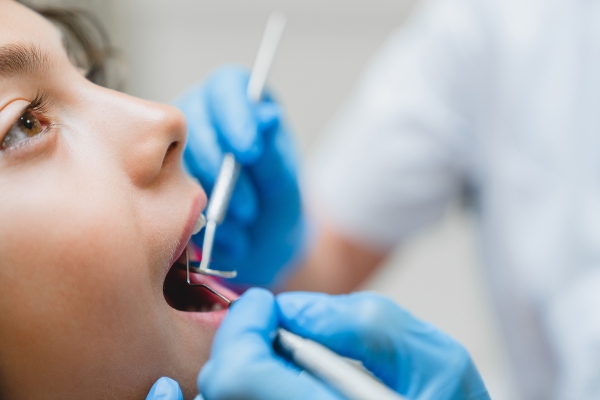
 Oral health is important for every age, and it’s recommended that children visit a pediatric dentist once the first tooth comes in. While this may seem young, cultivating good dental practices and hygiene habits can reduce the need to make an appointment to address tooth pain, cavities, or bleeding gums. Take advantage of the first appointments to ask questions about the dental care needs for children.
Helpful questions to ask
Though dental hygiene usually refers to the habits of brushing and flossing the teeth and gums at least twice a day, pediatric approaches have some differences due to the age and size of children. From how regularly a child should see a pediatric dentist to how to prevent tooth decay, these are excellent questions to ask when discussing an infant's oral health.
How should a baby's teeth be cleaned?
To reach all of the areas in the mouth, use a small toothbrush. Sizes are manufactured for all ages, including infants. These small brushes have a tinier head with soft bristles that are not abrasive on the gums or teeth. While brushing at bedtime can remove a significant amount of plaque that leads to tooth decay, if a child takes a cup or bottle to bed, it is wise to brush in the morning as well.
When should a child first visit a dentist?
Children develop teeth at different ages, though the earliest teeth can start to poke through the gums as early as six months old. It is recommended that parents schedule a dental visit once the first tooth comes through or around the first birthday. The visit can give the dentist a look at any teeth present, but it is also an educational opportunity for parents. General oral health can be discussed, as well as fluoride, diet needs, recommended hygiene products, and any potential problems already evident.
Will a pacifier hurt a child’s teeth?
Children who suck their thumbs or use pacifiers can inadvertently damage their teeth. These habits could create crooked or crowded teeth and cause bite problems. This is especially true if these habits still exist when the permanent teeth start to come in.
How much fluoride should a child have?
Dental professionals encourage fluorinated water as an easy way to help grow strong teeth, but not everyone consistently drinks enough of this water to prevent tooth decay. However, children under six months of age do not need fluoride as there are no teeth present.
What is a leading concern for child tooth decay?
Children’s teeth are susceptible to decay from excess sugars, food particles, and unresolved plaque just like adult teeth. Babies are at a disadvantage when they are put to sleep with bottles or through nursing. Rapid decay is caused by the reduced ability of the body to naturally clean the mouth at night via saliva.
Conclusion
As a parent, it is important to know how to care for a child’s teeth. Schedule a visit with a pediatric dentist early on to help a child can develop healthy gums and strong teeth.
Request an appointment or call Grand Parkway Pediatric Dental at 832-579-0960 for an appointment in our Richmond office.
Recent Posts
Kids dental crowns stand out among dental restorations as versatile and effective solutions for various oral health issues. A dental crown, or "cap," covers and encases a damaged or weakened tooth, restoring its strength, function, and appearance. Its design is vital for children with damaged teeth, protecting their natural teeth while allowing their oral state…
Dental veneers or kids dental crowns may both be viable solutions to improve the appearance and functionality of adult teeth. However, dental crowns are the best suited for repairing a child’s teeth. Discover why dentists recommend dental crowns for children.Dental veneers are thin porcelain or composite resin shells that the dentist will custom-design to fit…
Kids dental crowns are a common treatment in pediatric dentistry that restores and protects damaged primary and permanent teeth. Also referred to as dental caps, these restorations help maintain a child's oral health by covering and strengthening weakened teeth. Pediatric dentists often recommend crowns when other restorative treatments, such as dental fillings, are not enough…