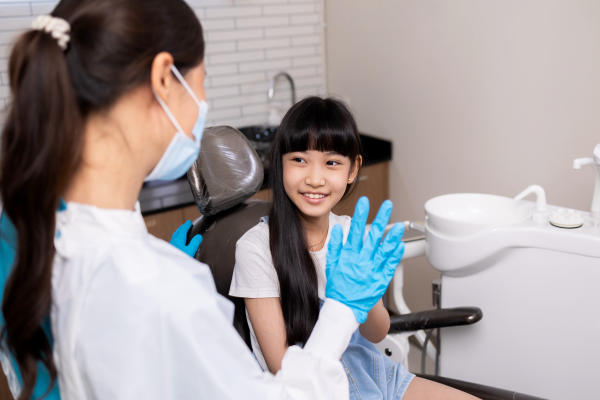
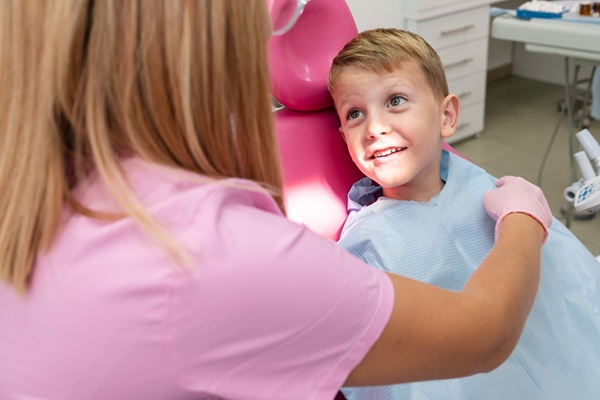
Early dental care visits are encouraged after your child’s first birthday and include a regular check-up and cleaning every four to six months. In addition, other services are often a part of an early dental care treatment and prevention plan discussed in this review.
Early dental care treatments
Early dental care services may vary for each practice based on each dentist’s focus and specialty. However, there are more common services that you can expect when visiting a dentist that offers early dental care services. These notably include diagnostic, preventive, educational, restorative, and early orthodontic services.
Diagnostic services
Diagnostic services for early dental care are not the same as diagnostic services for adults. Diagnosis in children is less about looking for oral health issues based on symptoms and more about simply understanding the child’s oral health in general. There are rarely oral health issues to address during the toddler age. Common diagnostic services for early dental care include:
- Dental X-rays.
- Oral examination.
- Family history review.
- General health review.
Preventive services
As mentioned, perhaps the primary goal of early dental care is to prevent oral health concerns now as well as in the future. Dentists can help reduce the risk of many oral health issues through preventive services. These preventive services include:
- Routine cleanings.
- Dental sealants.
- Fluoride treatment.
- Educational services (see below).
Educational Services
Educational services aim to equip parents and the child with the information they need to prevent oral health concerns and recognize them if they develop. Educational services may include a simple discussion on each child’s oral care routine visit and what improvements they and we can make. It also includes providing dietary information. We may also advise on how to prevent dental trauma in the future (i.e., the importance of a mouthguard).
Restorative services
The goal is to prevent the need for restorative procedures. However, in some cases, the need for restoration may still be in order. Common restorative procedures include but are not limited to:
- Cavity fillings.
- Dental crowns.
- Dental sealants.
- Baby root canal.
Early orthodontic services
Dental practitioners do not recommend orthodontic care before the age of 8 or 9. However, before orthodontic services, such as braces and clear aligners, some services and treatments can help; these services are referred to as “early orthodontic care.” We typically recommend early orthodontic care for six- or seven-year-old children who may be at a higher risk for misaligned jaw and teeth. Notable early orthodontic care services include palatal expanders and early braces, among other possible recommendations.
Schedule your child’s first dental visit today
You can schedule a dental visit with us today if your child is due for their first visit (or if they are due for their next follow-up visit). You can feel confident that your child will feel confident and comfortable during their visit with us. We take steps to ensure our office is kid-friendly, and we have a staff that understands how to communicate effectively with young children.
Request an appointment or call Grand Parkway Pediatric Dental at 832-579-0960 for an appointment in our Richmond office.
Recent Posts
A pediatric dentist can help determine the root cause of an oral health issue and if a patient will benefit from a dental crown. While there are many reasons for getting these restorations, the main goal is always to restore the tooth and enhance its functions. Here are several warning signs that your child may…
Kids dental crowns are a valuable investment in your child's oral health and smile's appearance. Whether they have received crowns to restore damaged teeth or for cosmetic reasons, it is important to properly care for them to ensure they last a long time. Here are some essential tips to help maintain the longevity and aesthetics…
Pediatric dentists use kids dental crowns and bridges to restore and protect the teeth of young patients, ensuring that their smiles stay healthy and functional. While both restorations can address dental issues, there are differences in how dentists apply them, their purpose, and the number of teeth involved. Understanding these differences helps parents make informed…