When To Consider a Children’s Root Canal Over Pulling a Tooth
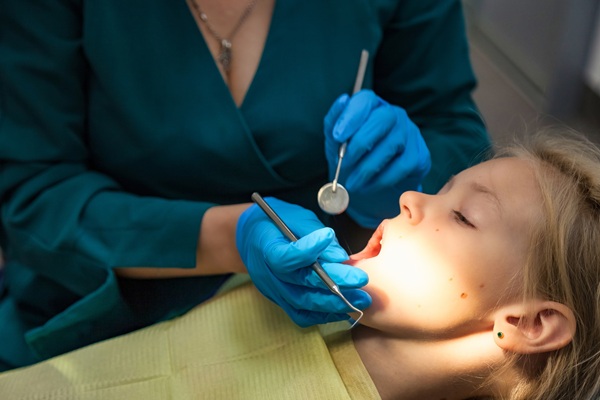
A children's root canal helps save baby teeth when deep decay threatens a child’s dental health. When your child has severe tooth pain or a dental injury, deciding whether to treat or remove the tooth can be stressful for parents. Even though baby teeth will eventually fall out, they are important for a child’s oral growth and development.
What is a children’s root canal?
A children’s root canal treats the inside of a baby tooth after decay or injury affects the pulp, which contains nerves and blood vessels. During treatment, the dentist removes the damaged or infected tissue, cleans the tooth, and seals it. The tooth can then remain in place until it is ready to fall out on its own.
For baby teeth, the exact procedure can vary. There are two strategies that pediatric dentists can use: pulpotomy and pulpectomy. A pulpotomy removes the affected pulp from the crown of the tooth, while a pulpectomy removes pulp tissue from the roots.
Reasons to save a baby tooth
It is easy to assume that a baby tooth does not need much attention because a permanent tooth will replace it. That is not always the case. Primary teeth help children chew and speak clearly.
They also hold space for permanent teeth. If a baby tooth comes out too early, nearby teeth can shift into the open space. That shift can leave less room for the permanent tooth and may contribute to alignment problems. A dentist can sometimes use a space maintainer after an extraction to help prevent this shift. However, if a baby tooth can be safely restored, keeping the natural tooth may be the simpler option.
When is a root canal a better choice?
Several factors can make a children’s root canal a good alternative to extraction.
The tooth has years left before it falls out
If a baby tooth is not close to its normal replacement time, saving it may offer a clear benefit. Removing it too early can affect the spacing of nearby teeth. The dentist may use the child’s age, dental X-rays, and the development of the permanent tooth to estimate how long the primary tooth is likely to remain.
Decay has reached the pulp
A small cavity may only require a filling. Deep decay, however, can reach the pulp and cause significant pain or infection. Signs of a more serious problem can include a persistent toothache, sensitivity, swelling around the tooth, a gum bump, or an abscess. Some infections cause few noticeable symptoms that only appear on an X-ray. If the tooth still has enough healthy structure, a root canal can remove the infected tissue and allow the tooth to stay in place.
The tooth is strong enough
A root canal only makes sense if the tooth can support a restoration afterward. However, with a badly broken tooth, severe decay below the gumline, or major damage to the roots may make extraction the better choice. A pediatric dentist will assess the amount of healthy tooth structure remaining before recommending treatment.
When pediatric dentists recommend extraction
Extraction can make more sense when a baby tooth is too damaged to repair or when the permanent tooth is close to eruption. Severe decay can sometimes leave too little tooth structure for a filling or crown. An infection may also cause enough damage to the surrounding bone or roots that saving the tooth is no longer practical.
Root resorption is another factor. Baby tooth roots naturally break down as permanent teeth prepare to come in. If that process is already well advanced, a root canal may provide little long-term benefit. That said, if the extraction happens well before the permanent tooth is ready, a space maintainer may help keep the surrounding teeth from moving into the empty area.
What does the dentist consider when recommending treatment?
There is no single rule that determines whether a baby tooth should stay or come out. The decision depends on the condition of the tooth and the child’s stage of dental development. The pediatric dentist may consider the following factors:
- How deep the decay is
- Whether the pulp is infected or damaged
- How much healthy tooth structure remains
- The condition of the tooth roots
- How soon the permanent tooth is expected to erupt
- Whether nearby teeth could shift after extraction
- The child’s symptoms and overall dental needs
Dental X-rays are often useful because they show the roots and developing permanent teeth beneath the gums.
Learn more about children’s root canals
If your child is experiencing tooth pain, swelling, or sensitivity, our experienced pediatric dentist at Grand Parkway Pediatric Dental can help determine the best course of treatment. Our goal is to protect your child’s oral health now while supporting the development of healthy permanent teeth in the future. Call our office to learn more about a children’s root canal or to schedule an appointment.
Request an appointment here: https://www.grandparkwaypediatricdental.com or call Grand Parkway Pediatric Dental at (832) 579-0960 for an appointment in our Richmond office.
Check out what others are saying about our services on Yelp: Children's Root Canal in Richmond, TX.
Recent Posts
A pediatric root canal is an essential procedure for saving a damaged tooth. This treatment addresses deep decay while ensuring that the primary tooth remains in place to guide the eventual eruption of permanent teeth. After the initial treatment is complete, the focus must shift to providing a durable restoration that can withstand the daily…
A pediatric root canal can restore your child’s infected tooth. The pediatric dentist will assess the child’s painful tooth. Recommending this procedure can prevent the infection from spreading. Here are the details on what to expect after your child’s scheduled pediatric root canal.Preparing the child well can cause the young patient to relax and cooperate.…
Looking for baby root canal information? Pediatric dentists are dental specialists who serve as great resources to utilize when parents are preparing their child for a pediatric root canal. Baby root canals are similar to traditional adult ones; however, they are geared toward the primary teeth, also known as the baby teeth. Of course, the…
A baby root canal is sometimes necessary for your child. It is also a common treatment that is often performed on this type of teeth. A root canal treatment is usually carried out on an infected tooth. This can happen because of decay, but it can also be because of an injury to the tooth.…