3 Common Treatments for Baby Bottle Rot

Baby bottle rot is a type of decay that affects the primary teeth of infants. Without early intervention, baby bottle rot affects the milk teeth in the short term and the permanent teeth later on. Routine checkups can help to detect such issues early on.
Early childhood tooth decay can cause baby teeth to fall out long before permanent teeth start to erupt. This often leads to orthodontic problems and, in some cases, speech difficulties. Treating baby bottle rot goes a long way to ensure healthy teeth through childhood and into adulthood. Here is what a parent or caregiver needs to know about early childhood caries.
3 Treatments for baby bottle rot
Mouth bacteria use sugar and carbohydrates as fuel, which they use to attack teeth with acids they excrete. In infants and toddlers, this fuel source is usually the contents of a baby bottle. Exposing a child’s teeth to syrup, fruit juice, and milk makes them more prone to tooth decay.
Harmful mouth bacteria turn these sugars into acids that eat away at tooth enamel. Eventually, the acid burns a hole into the tooth, giving the bacteria an entry point into the inner tooth. Tell-tale symptoms of early childhood tooth decay are:
- Chalky, white spots on the teeth
- Discoloration
- One or more holes on a tooth
- Pain and swelling
- Fever
Left unchecked, bacteria can cause extensive tooth decay and the early loss of baby teeth. A pediatric dentist will use one of several interventions to preserve baby teeth.
1. Fluoride treatments for early-stage tooth decay
Tooth decay starts its life cycle as chalky white spots on the enamel. The spots form as acids from harmful bacteria dissolves the minerals that form the enamel. Fortunately, the application of topical fluoride can reverse tooth decay at this stage.
Parents and caregivers should always check on the health of their children’s teeth. They can save their child a lot of hassle if they catch tooth decay in its earliest stage.
2. Direct filling for a small cavity
Filling a small cavity will keep a baby tooth in place until its replacement is ready to erupt. The kids’ dentist will perform the minor procedure with the help of a local anesthetic and, for older kids, laughing gas.
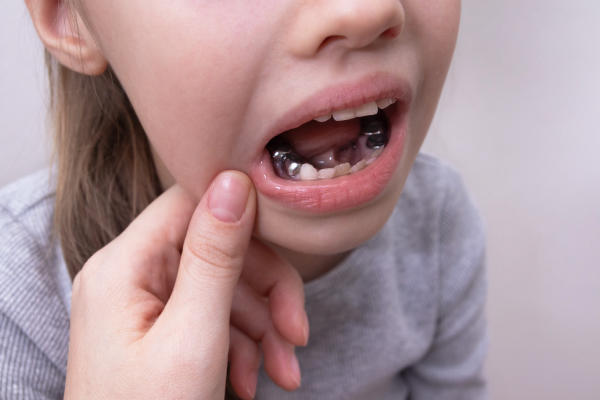
3. Metal crowns for severe decay
Early childhood decay can be severe enough to warrant tooth extraction. However, a kids’ dentist may choose to save the tooth to prevent future orthodontic problems. They will remove the infection from the tooth and fit a crown to keep the tooth from falling out ahead of time.
Preventing baby bottle tooth decay
A child’s visits to the dentist can be uneventful, with the help of a few measures on the caregiver's part. For starters, schedule bottle feedings half an hour before bedtime. This allows for time to clean the child’s mouth before putting them down for sleep.
More importantly, keep acidic, sugary drinks and syrup out of the child’s diet. Lastly, avoid sharing a spoon with the baby to prevent a transfer of harmful mouth bacteria. The same goes for pacifiers.
The bottom line
Our team can treat your child’s baby bottle rot and help you to keep your kid’s teeth healthy going forward. Contact our dental office today to set up an appointment.
Request an appointment here: https://www.grandparkwaypediatricdental.com or call Grand Parkway Pediatric Dental at (832) 579-0960 for an appointment in our Richmond office.
Check out what others are saying about our dental services on Yelp: Pediatric Dentist in Richmond, TX.
Recent Posts
Pediatric dentists recommend kids dental crowns for children’s teeth. Veneers are a cosmetic treatment for adults, while dental crowns serve restorative purposes for both adults and children. Here is a closer look at the differences between these two treatments and why dental crowns are the appropriate choice for kids.Dental crowns and veneers are similar in…
Kids dental crowns are a versatile solution in pediatric dentistry. They help protect damaged teeth and support the replacement of missing ones, making them a reliable option for long-term oral health. They can also improve the appearance of the smile. Pediatric dentists recommend crowns to restore function, protect developing teeth, and ensure a healthy, lasting…
Kids dental crowns are a popular option for restoring a smile and offer benefits to children of all ages. A dental crown is a customized, tooth-shaped cap placed over a damaged or compromised tooth to help restore its shape, size, appearance, and strength. Discover common signs indicating a kids dental crown is right for your…
Kids dental crowns reinforce a decayed or damaged tooth, restoring its function and beauty. These are just two of the many benefits of crowns. For instance, they also require minimal aftercare. Children of all ages can benefit in different ways from these versatile restorations.Kids dental crowns can restore a variety of dental conditions. They are…