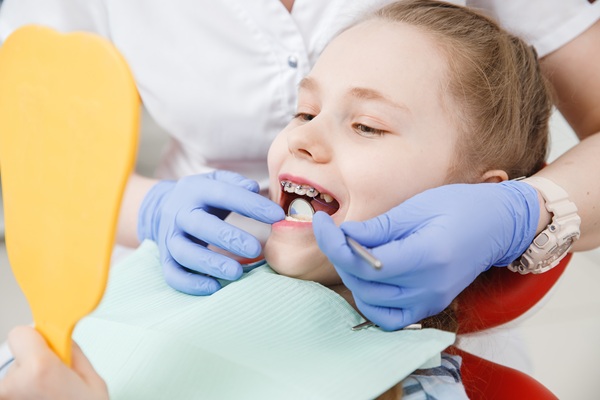
Childrens braces can correct bite issues early and set the stage for a healthy, beautiful smile. Not only can this orthodontic treatment straighten teeth, but it can also guide jaw development. A pediatric dentist will tailor this treatment to a child’s specific developmental stage and needs. Thus, learning how to recognize the signs that a child may need braces can help ensure a confident smile and a healthy bite for years to come.
Tailoring orthodontic treatment to children
A pediatric dentist designs childrens braces with the unique needs of growing patients in mind. Unlike braces for adults, these treatments consider developing jaws, the arrival of permanent teeth, and the emotional needs of younger patients. Options may include traditional metal brackets, ceramic varieties for a more discreet appearance, and other specialized systems.
For each patient, the pediatric dentist selects materials and designs that balance comfort, aesthetics, and efficiency throughout each treatment stage. With advanced training in child development and dental care, these dentists foster a supportive environment that helps children feel relaxed and confident. Close collaboration with families ensures that the treatment plan matches the child’s growth stage, oral health requirements, and comfort level.
5 signs a kid may need childrens braces
Every kid’s smile develops at a unique pace, and certain signs can indicate the need for orthodontic treatment. A pediatric dentist can evaluate these signs during routine visits and recommend a timely orthodontic assessment. Here are five of the most common signs:
Prolonged thumbsucking
Thumbsucking beyond the toddler years can negatively influence the development of the teeth and jaws. Persistent pressure from the thumb can push teeth out of alignment, create an open bite, or narrow the upper jaw. It can also affect speech and chewing. When prolonged thumbsucking impacts dental alignment, a pediatric dentist may recommend straightening the teeth with childrens braces.
Mouth breathing
Mouth breathing, whether due to allergies, enlarged tonsils, or nasal blockages, can impact facial growth and smile development. This is because breathing through the mouth can change jaw position, narrow dental arches, and push teeth out of alignment. The good news is that these changes can be corrected with childrens braces. A pediatric dentist can also work in collaboration with other healthcare providers to address the underlying cause of mouth breathing.
Irregular loss of baby teeth
Baby teeth typically follow a predictable pattern when they loosen and fall out. If teeth are lost much earlier or later than expected, it may be a sign of alignment issues or space problems in the mouth. Early loss may cause neighboring teeth to shift, while delayed loss can prevent permanent teeth from emerging in the correct position.
A pediatric dentist monitors tooth eruption patterns during regular checkups. They may recommend childrens braces or space maintainers to make sure that the permanent teeth erupt in proper alignment. Early orthodontic care through childrens braces can reduce the need for more complex orthodontic work in adulthood.
Visibly crooked teeth or a misaligned bite
Crooked teeth, overlapping teeth, or bite problems (overbites, underbites, and crossbites) are among the most common reasons for recommending childrens braces. Misalignment can make chewing less efficient and increase the risk of tooth wear. It can also create new nooks and crannies for plaque and tartar to accumulate.
With an orthodontic assessment, a pediatric dentist can identify the extent of misalignment and develop a customized treatment plan. Correcting these issues early not only improves appearance but also supports proper speech, chewing function, and oral health. With timely intervention, it is possible to correct many bite problems before they get worse.
Jaw popping or clicking
Audible popping or clicking in the jaw when opening or closing the mouth can indicate a problem with the temporomandibular joint (TMJ). For adults, this usually occurs in the morning after a night of teeth grinding; in children, misalignment of the teeth or jaws is often the culprit. This is because misalignment can strain the joint over time.
If left unaddressed, TMJ issues in children can cause discomfort, headaches, and further bite problems. A pediatric dentist can assess the patient’s jaw function and determine whether childrens braces could be the most effective way to realign the bite and relieve joint stress.
Explore orthodontic care for your kid
With childrens braces, a pediatric dentist straightens teeth while supporting their healthy development. Knowing the signs that a child may need orthodontic care allows for early intervention, which can lead to more effective and efficient treatment outcomes. Contact our Richmond team to learn whether your kid could benefit from childrens braces.
Request an appointment here: https://www.grandparkwaypediatricdental.com or call Grand Parkway Pediatric Dental at (832) 579-0960 for an appointment in our Richmond office.
Check out what others are saying about our services on Yelp: Childrens Braces in Richmond, TX.
Recent Posts
Kids dental crowns are a reliable and effective tool for restoring damaged teeth. While most parents think of dental crowns in relation to root canals, crowns can also restore beauty and function to cracked teeth. If your child has fractured a tooth, a dental crown may be the most ideal solution.Kids dental crown sits on…
Kids dental crowns are caps that cover and replace natural tooth structures to restore their shape, function, and appearance. They are a popular restorative treatment that can address various dental issues. By investing in kids dental crowns, you are not only restoring the look of your child’s smile, but you are also safeguarding their future…
Managing acute tooth pain before an upcoming pediatric cavity treatment requires careful attention from parents. Dental discomfort causes immense distress for young patients and demands prompt intervention at home. Understanding how to soothe this pain keeps a child comfortable until a professional dental examination occurs.Tooth pain in young children often arises from deep decay that…
A sedation dentist can help make dental restorations, such as dental crown placement, a calm and tear-free experience for your child. If dental visits and procedures make your little one feel anxious or stressed, learning about relaxation techniques can help ease your worries. Sedation dentistry can help children feel comfortable and build the confidence to…