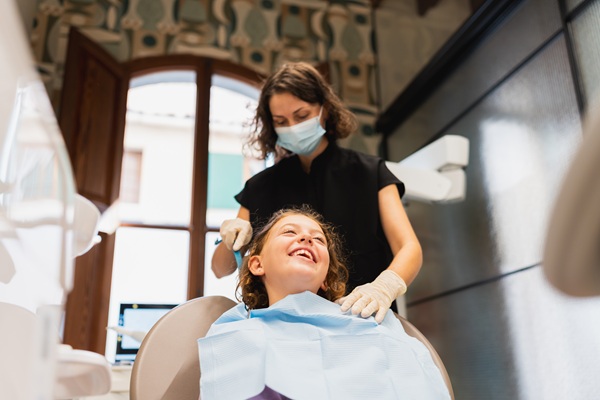
Questions about teeth whitening for kids often begin when permanent teeth look darker than nearby baby teeth. While that difference can be normal because permanent teeth contain more dentin, which has a warmer tone, discoloration can also come from stains, injury, medications, developmental changes, or dental problems. Before whitening begins, our pediatric dentist can identify the cause and determine whether cosmetic care is appropriate. Here is everything you need to know about brightening your child’s smile and when the dentist will recommend it.
What to know about teeth whitening for kids
Whitening is not a one-size-fits-all treatment for children or teenagers. The American Academy of Pediatric Dentistry discourages full-arch cosmetic bleaching for children with primary (baby) teeth or a mixture of primary and secondary (permanent) teeth. Instead, the pediatric dentist considers dental development, oral health, the source of discoloration, and the child’s ability to follow directions. Some patients—most likely teens—may be candidates for supervised whitening, while younger children may benefit from other approaches. Regardless, a dental examination helps determine the safest next step for each patient.
Why children’s teeth may look discolored
Not every change in tooth color means a child needs teeth whitening treatment. Surface stains (extrinsic) can develop from pigmented foods and drinks, plaque buildup, or oral hygiene habits, while deeper stains (intrinsic) may relate to enamel development, medications, injury, or changes inside a tooth. Therefore, a single tooth that becomes darker after trauma needs professional evaluation rather than an at-home whitening product. The pediatric dentist may also identify decay, tartar, or other conditions affecting tooth appearance that patients cannot treat with over-the-counter whitening options. In the end, treating the cause first supports oral health, appearance, and the child’s overall development.
Why professional guidance matters
Like treatments for adults, teeth whitening for kids uses hydrogen peroxide or carbamide peroxide to lighten tooth color. These ingredients can temporarily cause tooth sensitivity or gum irritation. Children and adolescents may also have restorations, erupting teeth, or other factors that affect whitening results. Guidance from a pediatric dentist helps families choose an approach that aligns with their child’s dental development.
Safer ways to brighten a child’s smile
A professional cleaning can remove plaque, tartar, and some external stains that brushing leaves behind. In some cases, the pediatric dentist may even recommend a deep cleaning, which lifts the gumline to clean the full surface of the tooth and remove darker margins from trapped bacteria. Of course, brushing with fluoride toothpaste and flossing help keep enamel clean and support cavity prevention.
Until kids are of a responsible age, parents should also help them remain cautious about their diet choices. Drinking water after meals and limiting frequent highly pigmented or sugary drinks can reduce buildup on tooth surfaces. When discoloration remains, the pediatric dentist can decide whether another cosmetic or restorative option makes sense.
When whitening may become an option
There is no single birthday that automatically makes whitening appropriate. Dental development varies, so the dentist looks at whether all permanent teeth have erupted, whether the gums and enamel are healthy, and whether cavities or sensitivity are present. The type of discoloration also matters because not every stain responds the same way to whitening. When whitening is appropriate for a patient, professional supervision can help select the product, concentration, schedule, and application method, making this approach more useful than relying on a fixed age.
What families should avoid
Do-it-yourself (DIY) whitening methods can be tempting when children feel self-conscious about tooth color, especially right before an event like picture day. However, acidic fruits, abrasive powders, charcoal products, or household mixtures may irritate oral tissues or wear enamel without reliably improving tooth shade. The same goes for using whitening strips or gels without dental guidance, as this can also make it harder to identify the cause of discoloration.
Remember, parents, kids, and the pediatric dentist are partners in providing well-rounded oral care for the child. Therefore, the dentist will encourage parents and patients to bring all concerns, even cosmetic ones, to them at any point throughout the year. Instead of waiting for a biannual appointment or playing the guessing game, the dentist can review the child’s dental history, assess the current state of the smile, and recommend appropriate treatment and why it is the most effective course of action. Safe teeth whitening for kids starts with understanding the tooth, not simply changing its color.
Schedule your child’s evaluation
Questions about tooth color deserve an individualized answer because the safest solution can vary from child to child. A pediatric dental evaluation can determine whether professional cleaning, monitoring, restorative care, or whitening deserves consideration. When teeth whitening for kids is appropriate, dental supervision helps guide treatment, reduce avoidable risks, and set realistic expectations. Call us today to schedule your child's evaluation.
Request an appointment here: https://www.grandparkwaypediatricdental.com or call Grand Parkway Pediatric Dental at (832) 579-0960 for an appointment in our Richmond office.
Check out what others are saying about our services on Yelp: Teeth Whitening for Kids in Richmond, TX.
Recent Posts
Child teeth whitening can make a significant difference in a kid’s self-esteem, especially as they grow older and become more aware of their appearance. However, many parents wonder whether whitening is safe and appropriate. A pediatric dentist can tailor teeth whitening to younger patients, focusing on restoring a natural, healthy smile while protecting developing teeth…
If you want to improve the look of your smile with minimal effort and time, a professional teeth whitening treatment is a great option. These procedures can help remove years of staining for teeth that look whiter, beautiful, and younger after just one session. Post-treatment sensitivity can happen to some, but there are many ways…
When it comes to teeth whitening for kids, there is a completely different standard compared to what can be used to whiten the teeth of an adult. For example, the American Academy of Pediatric Dentistry recommends staying away from whitening strips when it comes to improving the appearance of a person's teeth.Theirs is still a…
Kids dental crowns are a common treatment in pediatric dentistry that restores and protects damaged primary and permanent teeth. Also referred to as dental caps, these restorations help maintain a child's oral health by covering and strengthening weakened teeth. Pediatric dentists often recommend crowns when other restorative treatments, such as dental fillings, are not enough…