Basic Guidelines for Pediatric Dental X-rays
Pediatric dental X-rays are imaging tests that help dentists to determine what is going on in structures inside a child’s mouth. While there are misconceptions that X-rays expose patients to dangerous levels of radiation, pediatric dental X-rays actually emit less radiation than most home appliances, like a television.
X-rays are forms of radiant energy, just like radio waves or light waves. X-rays are more energetic than visible light rays, and unlike light rays, they can penetrate the body. This makes it possible for a radiologist to use X-rays to create a picture of what the insides of a person’s body look like.
Guidelines for pediatric dental-rays
People are regularly exposed to radiation from the sun, and many of the devices used daily, like smartphones and vehicles. This radiation can damage or alter living tissues, particularly when absorbed in high doses.
Medical tests like X-rays produce very small doses of radiation that are highly unlikely to lead to any problems. That does not mean these treatments are completely risk-free, however. Some schools of thought are concerned about children who are exposed to radiation early on having a higher risk of developing cancer later in life.
The type of X-ray performed also affects how much radiation that the child is exposed to. For example, continuous X-rays can lead to the child absorbing more radiation than if a single X-ray was used. A CT scan also exposes your child to more radiation than a single X-ray.
Reasons that pediatric dental X-rays might be recommended
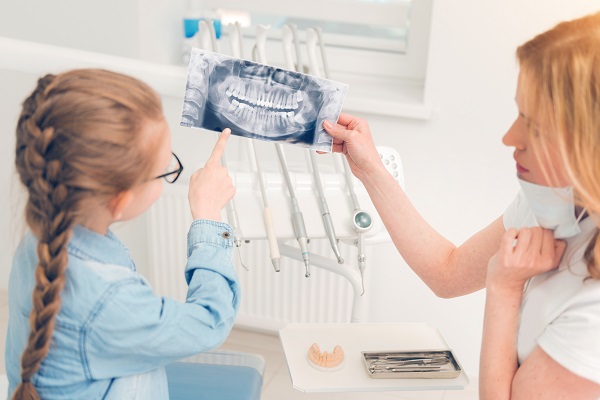
Dental X-rays help dentists get a clearer picture of what is going on underneath a child’s gums. They can be used to diagnose cavities in teeth roots or issues with the bone structures that support teeth. They enable the dentist to make a more accurate evaluation of the child’s dental health. The ways that parents can help minimize radiation from dental X-rays include:
- Talk to the dentist if they think that the child is getting too many X-ray tests
- Only approve continuous X-rays or CT scans when the benefit for the child has been clearly explained
- Avoid having the child repeat X-ray tests
- Ask the dentist if other tests emit less radiation
Radiation exposure from dental X-rays does not lead to any short-term issues, and there is no clear evidence that it causes significant problems in the long term. The amount of radiation that a child is exposed to during their appointment is negligible compared to the radiation that the child is exposed to daily from sunlight.
Still, these imaging tests should be kept to a minimum, and dentists already know this. If an X-ray is being requested, the child likely needs it.
X-rays help keep your child healthy
The small doses of radiation X-rays that your child can be exposed to are nothing compared to the benefits of being able to see what is going on underneath their gums. It allows for early diagnoses of developing issues, like root infections and cavities. Give us a call or stop by our Richmond clinic to set up an appointment with our dentist.
Request an appointment here: https://www.grandparkwaypediatricdental.com or call Grand Parkway Pediatric Dental at (832) 579-0960 for an appointment in our Richmond office.
Check out what others are saying about our dental services on Yelp: Pediatric Dental X-rays in Richmond, TX.
Recent Posts
Kids dental crowns are a versatile solution in pediatric dentistry. They help protect damaged teeth and support the replacement of missing ones, making them a reliable option for long-term oral health. They can also improve the appearance of the smile. Pediatric dentists recommend crowns to restore function, protect developing teeth, and ensure a healthy, lasting…
Kids dental crowns are a popular option for restoring a smile and offer benefits to children of all ages. A dental crown is a customized, tooth-shaped cap placed over a damaged or compromised tooth to help restore its shape, size, appearance, and strength. Discover common signs indicating a kids dental crown is right for your…
Kids dental crowns reinforce a decayed or damaged tooth, restoring its function and beauty. These are just two of the many benefits of crowns. For instance, they also require minimal aftercare. Children of all ages can benefit in different ways from these versatile restorations.Kids dental crowns can restore a variety of dental conditions. They are…
Kids dental crowns stand out among dental restorations as versatile and effective solutions for various oral health issues. A dental crown, or "cap," covers and encases a damaged or weakened tooth, restoring its strength, function, and appearance. Its design is vital for children with damaged teeth, protecting their natural teeth while allowing their oral state…