Children’s Dentist: A Guide to Fluoride Treatments

According to the children's dentist, healthy gums and teeth are crucial to a child's general wellbeing. Therefore, once the child's teeth start coming in, parents need to learn all that they can about good oral habits. One of the recommendations of the pediatric dentist is doing fluoride treatments as a preventive care measure against tooth decay. Continue reading to learn more about the procedure.
What is fluoride treatment?
Fluoride is a naturally occurring element that is present in water, meat, eggs, tea and fish. It helps reduce the risk of tooth decay and increase the rate of the remineralization process of the enamel. Fluoride treatment provided by the children's dentist is one of the sources of fluoride for the teeth, as well as fluoride toothpaste and rinses and fluoride-containing water.
Although fluoride can significantly reduce the occurrence of cavities, it may not do much for the teeth grooves. For optimal dental protection, the dentist may also provide dental sealants to cover the grooves that are hard to clean.
The safety of fluoride treatments
Water fluoridation is safe and effective. Fluoride toothpaste and other sources of fluoride are safe when used correctly. Fluoride fortifies the tooth enamel and can reverse tiny areas of decay on the teeth before they worsen into cavities.
The dentist will take time to enlighten parents on the need to protect their children's teeth with fluoride. The use of fluoride rinses and toothpaste should be according to recommendations and supervised by parents. Before recommending fluoride treatment or any fluoride supplement, the pediatric dentist will consider different factors, including the developmental age of the child.
When is fluoride treatment recommended?
According to the American Dental Association, children at moderate risk of cavities should get a fluoride treatment at least every six months, and children at high risk should get the treatment more frequently, every three or six months. Dentists have successfully used fluoride treatments for years to protect the dental health of children and adults, especially those who are prone to getting cavities. For children with a history of poor oral hygiene, dental decay or health issues that affect the condition of the tooth enamel, they may also provide special fluoride gels or rinses to use regularly at home.
The application of fluoride
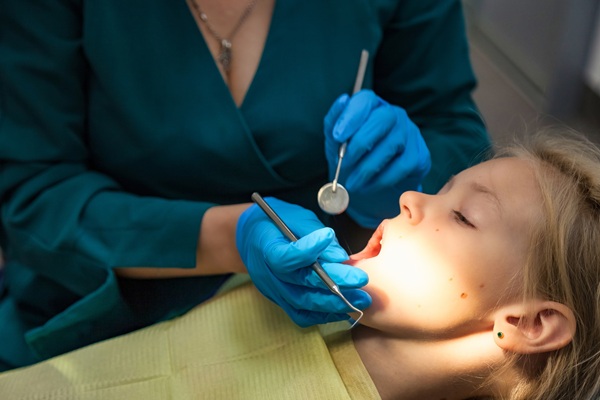
During a routine dental checkup, the dentist will apply the fluoride varnish over the top and sides of every tooth with a small brush. The fluoride is sticky at first but hardens when saliva touches it. The child will feel the hardened varnish but will not be able to lick it off.
The application of fluoride is painless and easy. The process takes only a few minutes. The child will be told not to rinse their mouth, eat or drink anything for at least 30 minutes afterward so the teeth can absorb the fluoride.
Final note
If you want to reduce your child's risk of getting a cavity, fluoride treatment can help. To learn more about the treatment, schedule a consultation with the children's dentist.
Request an appointment here: https://www.grandparkwaypediatricdental.com or call Grand Parkway Pediatric Dental at (832) 579-0960 for an appointment in our Richmond office.
Check out what others are saying about our dental services on Yelp: Children's Dentist in Richmond, TX.
Recent Posts
Kids dental crowns are a versatile solution in pediatric dentistry. They help protect damaged teeth and support the replacement of missing ones, making them a reliable option for long-term oral health. They can also improve the appearance of the smile. Pediatric dentists recommend crowns to restore function, protect developing teeth, and ensure a healthy, lasting…
Kids dental crowns are a popular option for restoring a smile and offer benefits to children of all ages. A dental crown is a customized, tooth-shaped cap placed over a damaged or compromised tooth to help restore its shape, size, appearance, and strength. Discover common signs indicating a kids dental crown is right for your…
Kids dental crowns reinforce a decayed or damaged tooth, restoring its function and beauty. These are just two of the many benefits of crowns. For instance, they also require minimal aftercare. Children of all ages can benefit in different ways from these versatile restorations.Kids dental crowns can restore a variety of dental conditions. They are…
Kids dental crowns stand out among dental restorations as versatile and effective solutions for various oral health issues. A dental crown, or "cap," covers and encases a damaged or weakened tooth, restoring its strength, function, and appearance. Its design is vital for children with damaged teeth, protecting their natural teeth while allowing their oral state…