Treatment Options for Baby Bottle Decay [Kids Dentistry]

Baby bottle tooth decay is a common pediatric dental issue that professionals in the kids dentistry specialty see often. This type of tooth decay, which many also refer to as early childhood caries, is relatively common among children under the age of five. However, it is also easily prevented through awareness and proper oral hygiene. That said, when a child does begin to show symptoms of caries, early treatment is necessary to prevent the need for more extensive and invasive treatment later in the child's life.
Common treatments for baby bottle tooth decay in kids dentistry
Treatment for early childhood caries varies based on the severity of the condition and the patient's age. In an ideal situation, a pediatric dentist identifies signs of decay early on and can utilize simple fluoride treatments to remineralize the enamel. A dentist may use one of two treatment methods. The first involves using fluoride during a typical cleaning appointment. The second involves coating the teeth in a fluoride varnish, which lasts for about three months. Both treatment methods help to slow or stop decay and, when decay is just starting, may even reverse some of the damage. If a child is particularly susceptible to caries, the dentist may recommend fluoride supplements.
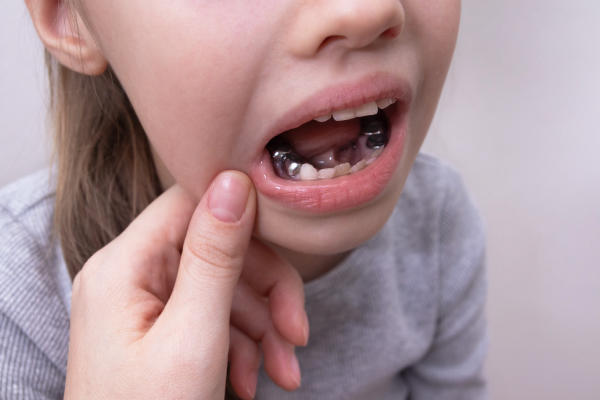
When decay is severe, a pediatric dentist may recommend treatments more commonly used on adults. The American Academy of Pediatric Dentistry recommends dentists apply stainless steel crowns because they are durable and require little maintenance. Depending on a child's age and maturity level, a kid's dentist may suggest general anesthesia or sedation.
In addition to treating the decay, a kid's dentist is likely to make suggestions for changes to the child's diet:
- Limit fruit juices and acidic liquids
- Substitute milk, formula or juice with water in a child's bottle
- Brush and floss the child's teeth once teeth have erupted
- Schedule regular dental visits after a child turns one
These measures, in combination with fluoride treatments, should be sufficient in stopping the spread of decay. However, if a child's teeth have brown or black spots, the gums are bleeding or swollen or the child has a fever and bad breath, more extensive restoration treatments are likely necessary.
The importance of treating baby bottle tooth decay
Many parents assume that early childhood caries is not an issue, as baby teeth are going to fall out anyway. This assumption can lead to extensive and costly repairs later on in the child's life. Though it is true that baby teeth begin fall out at around age five or six, the permanent teeth are present in the jawbone early on in life. Premature loss of baby teeth may prompt the mature teeth to grow in too soon, which can lead to alignment and spacing issues. Moreover, if the decay is extensive, it may extend beyond the root of the baby tooth and to the roots of the adult tooth beneath it.
Conclusion
Treating and preventing baby bottle tooth decay is an essential aspect of kids dentistry. If your child shows signs of early childhood caries, contact your pediatric dentist to discuss possible treatment options.
Request an appointment here: https://www.grandparkwaypediatricdental.com or call Grand Parkway Pediatric Dental at (832) 579-0960 for an appointment in our Richmond office.
Check out what others are saying about our services on Yelp: Read our Yelp reviews.
Recent Posts
Whether your child has a cracked, chipped, or decayed tooth, a kids dental crown can restore it to its original shape. An added benefit of dental crowns is that they can last up to 15 years with proper care. Fortunately, caring for crowns is straightforward, with most patients not needing to change their oral hygiene…
Pediatric dentists recommend kids dental crowns for children’s teeth. Veneers are a cosmetic treatment for adults, while dental crowns serve restorative purposes for both adults and children. Here is a closer look at the differences between these two treatments and why dental crowns are the appropriate choice for kids.Dental crowns and veneers are similar in…
Kids dental crowns are a versatile solution in pediatric dentistry. They help protect damaged teeth and support the replacement of missing ones, making them a reliable option for long-term oral health. They can also improve the appearance of the smile. Pediatric dentists recommend crowns to restore function, protect developing teeth, and ensure a healthy, lasting…
A children's root canal helps save baby teeth when deep decay threatens a child’s dental health. When your child has severe tooth pain or a dental injury, deciding whether to treat or remove the tooth can be stressful for parents. Even though baby teeth will eventually fall out, they are important for a child’s oral…